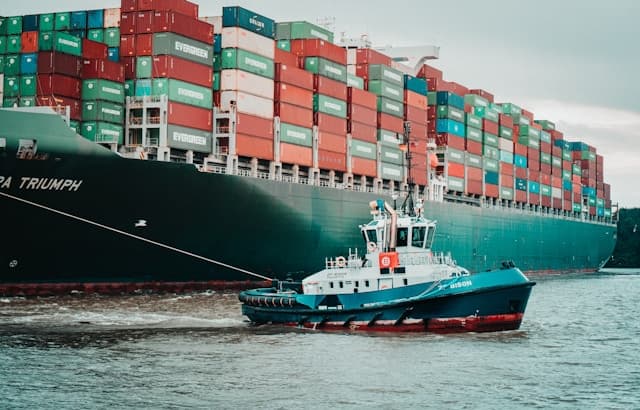

The regulatory and operational reality behind 2030 decarbonisation targets for global shipping — and what they imply for natural-product supply chains.
"Carbon-neutral logistics by 2030" has become marketing shorthand, but underneath the slogan sits a specific set of regulatory commitments — and a specific gap between those commitments and current operations. For natural-product shippers, the next four years will see real changes to fuel standards, emissions pricing, and Scope 3 reporting that affect what shipments cost and how they're described to customers.
The IMO 2030 targets, plainly stated
The International Maritime Organization's 2023 Strategy on Reduction of GHG Emissions from Ships sets a binding direction for international shipping. Its 2030 checkpoints: reduce total annual GHG emissions from international shipping by at least 20%, striving for 30%, compared to 2008 levels — and ensure that zero or near-zero GHG emission technologies, fuels, and energy sources represent at least 5%, striving for 10%, of the energy used by international shipping by 2030 [1].
The longer arc is steeper: at least 70% reduction (striving for 80%) by 2040, and net-zero by or around 2050 [1]. The 2030 figure is a checkpoint, not a destination.
The market mechanism behind the targets
In April 2025, IMO member states agreed to develop a marine GHG fuel standard and a maritime GHG emissions pricing mechanism — expected to be adopted in 2025 and enter into force in 2027 [2]. These regulate the lifecycle GHG intensity of marine fuels and put a price on emissions, effectively making compliance economic, not voluntary, for international shipping.
For shippers of natural products, the practical effect is that ocean freight costs will increasingly reflect carbon intensity. Operators investing in low-carbon fuels and modern hulls will be more cost-competitive on long-haul lanes than those running older tonnage on conventional bunker fuel.
Why "carbon neutral" needs careful framing
Carbon neutrality claims fall into three loose buckets, and they aren't interchangeable:
- Direct reductions — switching to lower-carbon fuels, route optimisation, modal shifts (rail over road, sail-assisted ocean over conventional). These are the credible engine of long-term decarbonisation.
- Operational efficiency — load consolidation, route optimisation, telematics-driven driver behaviour. Real per-shipment reductions, modest in percentage terms.
- Offset purchase — buying verified carbon credits to neutralise residual emissions. Useful as a bridge, criticised when used as a primary strategy without underlying reduction effort.
For botanical and supplement brands describing their supply chain to consumers, language matters: "lower-carbon shipping" is verifiable; "carbon-neutral via offsets" is contested; "net-zero shipping today" usually isn't accurate for international lanes given current fuel mix.
What natural-product shippers should expect by 2030
- Higher and more variable ocean freight pricing as fuel-standard compliance becomes priced into rates.
- Increased reporting demands from your retail customers — Scope 3 emissions data is moving from optional to expected in supply contracts.
- A meaningful share of new tonnage running on alternative fuels (methanol, ammonia, LNG transitionally), changing carrier selection criteria.
- Continued pressure on air freight emissions per kg, making mode choice (air vs ocean vs rail) a sustainability conversation as much as a cost conversation.
The companies that come out of this transition well will be the ones that started building emissions visibility into their supply chain operations now — not the ones that wait for regulatory deadlines to force the conversation.
- [1]International Maritime Organization — 2023 IMO Strategy on Reduction of GHG Emissions from Ships
- [2]European Commission Mobility and Transport — Landmark agreement towards achieving net-zero emissions from global shipping by 2050 (April 2025)
- [3]Global Maritime Forum — A guide to the IMO's Net-Zero Framework
- [4]International Council on Clean Transportation — Vision 2050: Fuel standards to align international shipping with the Paris Agreement